Research shows that tech in the classroom degrades learning outcomes.Our children deserve better.

Technology in the classroom has been sold to us based on a futuristic learning potential that overwhelmingly hasn't manifested--while providing tech companies cover to profit off of our children.

By giving 1:1 devices to students, Alaskan schools are pursuing a path with poorer learning outcomes than when kids are reading real books, writing on real paper, and engaging in project-based learning. Read the full story →

The research

More screen time in class means lower scores — everywhere, every subject.

PISA data spanning 2012–2018 and covering every country shows the same pattern: as daily in-school screen time rises, scores in reading, math, and science fall. This same finding is replicated across other robust international studies as well.

See all the evidence →
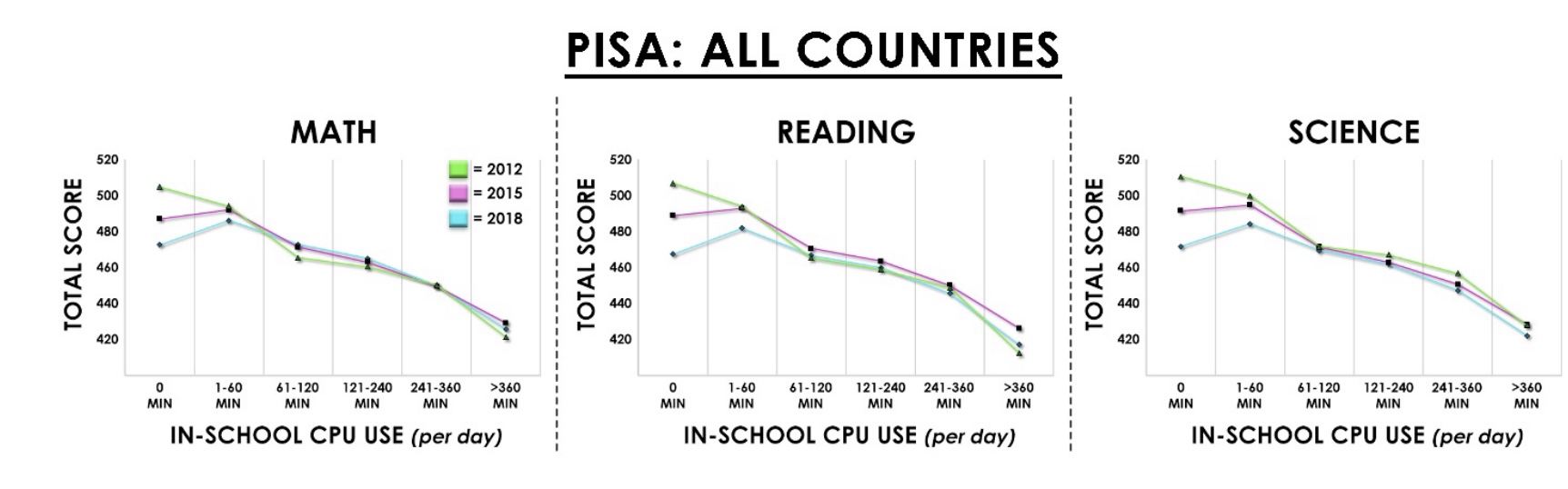
PISA assessment scores across all countries (2012–2018). Math, Reading, and Science scores all decline as in-school screen time increases from 0 to over 360 minutes per day.
PISA (all countries, 2012–2018): every additional hour of daily in-school screen time corresponds to lower scores across all three subjects.

We're asking for three things

If passed, these changes protect Alaskan students and give families a say in how technology is used in their kids' education.

01

Formalize a Tech Opt-Out Policy

Give families the right to opt their children out of screen-based instruction without forfeiting their right to a public education.

02

Create a Tech Use Task Force

Audit current technology usage and develop a clear, values-driven philosophy for when and why devices belong in the classroom.

03

Ban Screens from Grades K–3

Protect early elementary students from gamified "learning" apps designed to hook them. Five-year-olds don't need iPads, they need human support.

Sign the petition

Your name and voice will be delivered to your local school district at the beginning of the Fall 2026 school year.

Please share a concrete story about why this matters to you. What changes or behaviors have you noticed in your children or students? These stories will be used to illustrate the problem for policy makers.

By adding your name, you agree to be contacted about this campaign. We respect your privacy — see how we use your information.

Thanks, friend!

  • Formalize a Tech Opt-Out Policy
  • Create a Tech Use Task Force
  • Ban Screens from Grades K–3

One more step — sharing a bit about yourself helps us strengthen the case to school districts.

Take the 2 min survey below ↓

Help us build the case

Please take 2 minutes to answer a few questions about how this issue affects you. This data helps us make a more compelling case to school districts.

These research sessions would help provide community perspective and feedback on proposed policy solutions. Leave your email below if you'd like to have the opportunity to participate.

Your responses help us make the case. We respect your privacy — see how we use your information.

You're all done — thank you.

Your story and data help us make a stronger case to school districts. Now help spread the word.

How you can help

Whether you have 30 seconds or 30 minutes, here's how to make a difference.

01

Share it

Forward this page to two parents or neighbors who'd care. Every person who signs strengthens the case we bring to the district.

02

Show up

Attend a school board meeting and give public testimony. Each personal story adds weight to the issue.

→ FNSBSD meeting schedule
→ ASD meeting schedule

03

Go deeper

Emily Cherkin's toolkit has ready-made templates and scripts for talking to teachers and principals. Subscribe to her Substack to stay current on the national movement.

→ Download the EdTech Opt Out Toolkit
→ Subscribe to her Substack
→ Email us to get involved

Thanks! Your signature has been added.